
 1
Most pictures of Bora Bora show the same thing: a jagged peak above a turquoise lagoon, with a row of overwater bungalows on stilts in the foreground. Those bungalows sit mostly on the motu around the edge of the lagoon. The main island, the high green ring of land inside, is a different place: a few villages, churches, small shops, gardens and a single road that makes a full loop. It is easy to explore on your own, and it shows you how people actually live here.
Arriving in Vaitape
Bora Bora's airport is on a motu on the northern reef, so every arrival continues by boat across the lagoon. Ships and inter-island boats also tie up at the main village, Vaitape, on the west coast. Vaitape is where you find the town hall, the main church, banks, a post office, supermarkets and most of the island's everyday services.
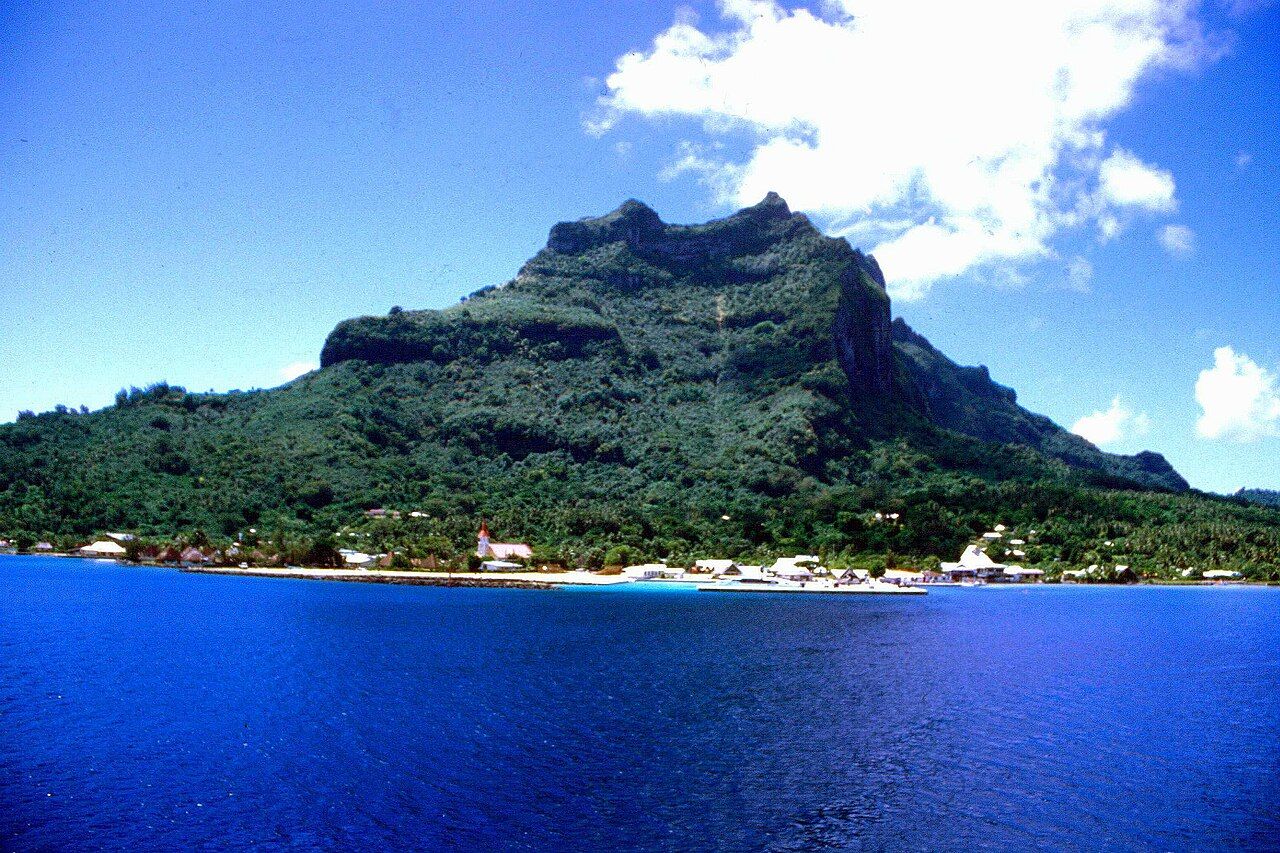
Walk the length of the village in the morning, when people are buying bread and children are heading to school. The church, with its red roof and white walls, is a good landmark and a calm place to sit; if you go in during a service, stay at the back and keep quiet.
The waterfront has a few craft stalls where you can see pareu (wrap cloths), carved wood and shell work. Look at things carefully and ask where they were made. Around the main quay, small stands sell fruit and cold coconuts in the morning.
Round the island by bicycle
The coast road around the main island is roughly 30 kilometres, flat almost everywhere, and it makes a fine day on a bike. Start early, when the light is soft and before the heat builds. Go clockwise or anticlockwise; either way you pass small bays, the motu across the water, family homes with breadfruit and mango trees, and long views of the lagoon changing colour as the sun moves.
Tips for the ride
- Carry at least two litres of water, and refill where you can.
- Wear a hat and cover your shoulders; the sun is strong even on cloudy days.
- The road is shared with cars and scooters and has little or no shoulder in places, so ride single file.
- Plan a long stop at Matira in the middle of the day, when the heat is fiercest.
Scooters and small cars can also be rented in Vaitape if cycling the whole loop sounds too much.
Also on the menuVanilla island: Taha'a
Matira beach
At the southern tip of the island, Matira is the best-known public beach on Bora Bora: a long curve of fine white sand that slopes into shallow, clear water. You can wade a long way out with the water barely at your waist, and the colour of the lagoon here is the one you have seen in photographs. It is a lovely place to swim, to rest in the shade of the trees and to watch the sunset.
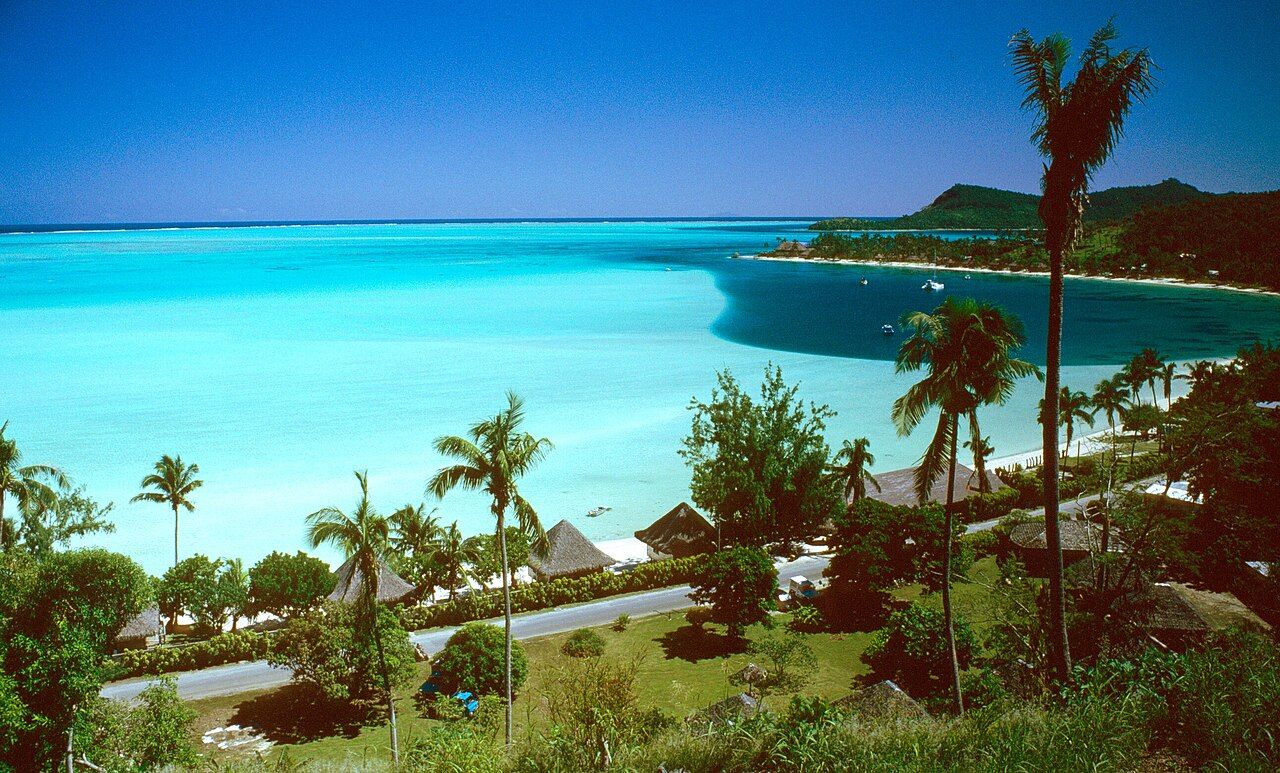
Snorkel only where the water is calm, stay away from boat channels, and keep off the coral. If you meet rays or reef sharks in the shallows, give them space and do not feed or touch them. Bring a reef-safe sunscreen or wear a rash top.
Mount Otemanu and the wartime guns
Otemanu is the black basalt peak that dominates every view of Bora Bora. Its summit is not a hiking goal: the rock is crumbly and dangerous, and the slopes are best admired from below. The views from the road around Faanui Bay and the east coast are superb, especially in the morning when the cliffs catch the light.
During the Second World War, the United States built a supply base on Bora Bora. Several coastal guns were hauled onto ridges above the lagoon, and some are still there. Reaching them means a short, steep walk up a rough track; wear proper shoes, go in the cooler hours and ask locally which paths are open, as some cross private land.
A short walk with a view
If you want a little climb without a long hike, ask in Vaitape about short trails to lookouts above the village or along the ridges. Paths change with weather and ownership, so local advice matters more than any map.
Eating simply on Bora Bora
Bora Bora has a reputation for being expensive, and it is. But you can eat well without spending heavily. Supermarkets in Vaitape stock baguettes, cheese, fruit, cold drinks and ready-made poisson cru. Small snack bars along the road serve grilled fish, chow mein, steak and fries, and generous sandwiches. In the evening, a few food trucks set up near the quay.
For a picnic at Matira, buy bread, fruit and a tub of poisson cru in the morning, keep it cool, and eat it before noon. The guide to poisson cru explains how the dish is made. To understand why chow mein appears on so many menus, read about the Chinese-Tahitian kitchen, and the fruit-stand guide explains what you are buying at the roadside.
When to go
Two or three days on the main island are plenty to ride the loop, spend a long afternoon at Matira and see Vaitape at its busiest. The rest of your time belongs to the lagoon.
The dry season, roughly May to October, brings clearer skies, less humidity and steady trade winds. November to April is hotter and wetter, with short heavy showers and occasional storms. Bora Bora fits into a loop with the other Leeward Islands; see ferries, flights and costs for how the islands connect.
