
 1
If French Polynesia has a national dish, this is it. Poisson cru, called i'a ota in Tahitian ("raw fish"), appears on the menu at every snack bar, every food truck and every family celebration. It is raw tuna, briefly marinated in lime juice, then folded with fresh coconut milk and crisp vegetables. It is cool, bright and filling at once, and it tastes best eaten close to the sea where the fish was caught.
What goes in
Every cook has a version, and families argue happily over the details: how long the lime should sit, whether carrot belongs, how much onion is too much. The core never changes, though.
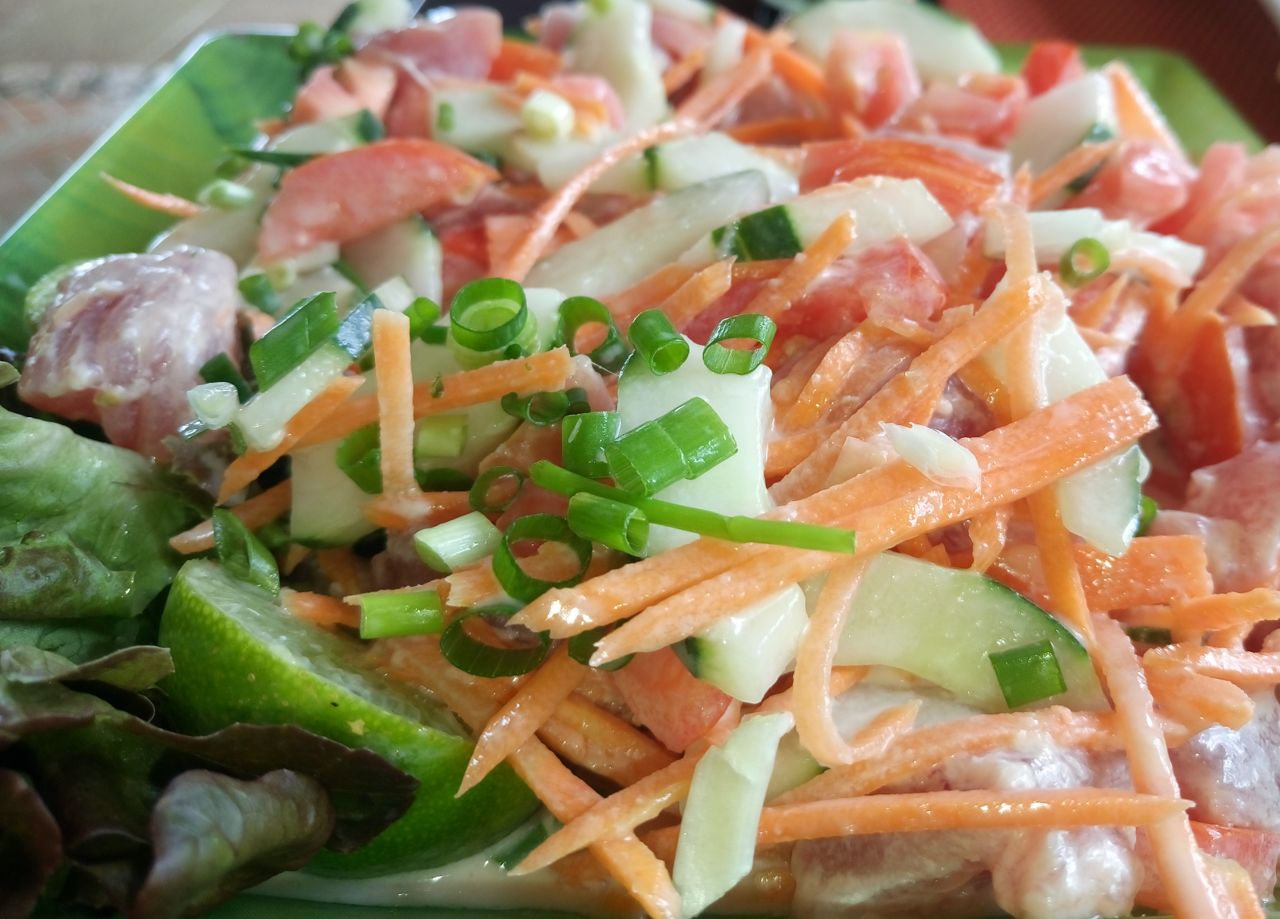
The base is always firm, very fresh fish. Yellowfin tuna is the most common choice, but bonito, mahi-mahi and other ocean fish appear too. The fish is cut into cubes the size of a fingertip, seasoned with salt, then covered with lime juice for a short time. The acid starts to turn the surface opaque while the centre stays soft and pink.
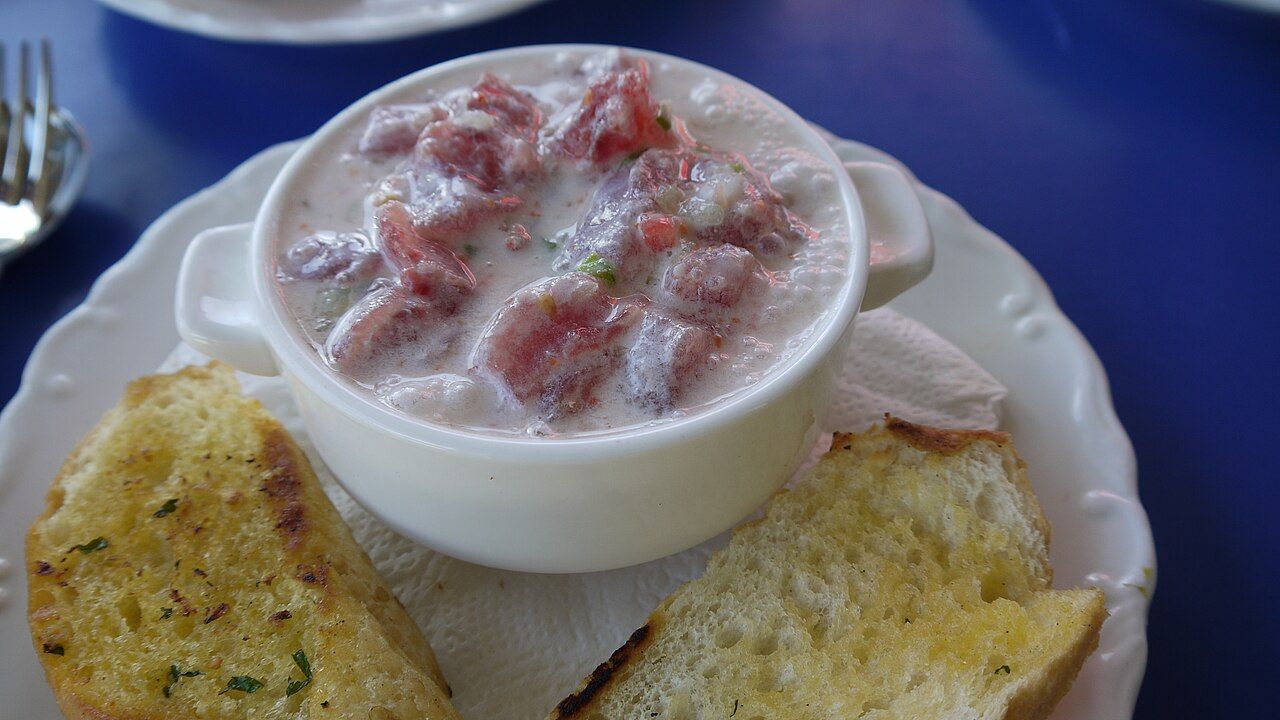
Then the lime is drained off, and coconut milk is poured over. In the islands this is fresh milk, pressed from grated mature coconut, rich and sweet and quite unlike the canned version. Diced cucumber, tomato and onion go in, often grated carrot and sometimes green onion. The dish is served cold, usually with rice, a chunk of baguette, or slices of breadfruit or fries.
Making it yourself
If you have access to a kitchen, poisson cru is easy to make with fish bought the same morning.
- Cut very fresh tuna into small cubes and salt lightly.
- Cover with fresh lime juice and leave for a few minutes, stirring once.
- Drain off most of the lime.
- Add finely diced cucumber, tomato and onion, plus grated carrot if you like.
- Pour over fresh coconut milk, stir gently and taste for salt.
- Eat immediately, or chill briefly.
To make fresh coconut milk, grate the flesh of a mature brown coconut, squeeze it through a clean cloth with a little warm water, and use the creamy liquid that runs out. Market stalls sometimes sell freshly grated coconut or bottled fresh milk.
Also on the menuChow mein and ma'a tinito: the Chinese-Tahitian kitchen
The Chinese version
Alongside the classic, you will often find poisson cru à la chinoise, the Chinese-style version born in the islands' Chinese-Tahitian community. It drops the coconut milk and instead dresses the raw fish with soy sauce, sesame oil, ginger and sometimes a little sugar, often with fine strips of vegetables or cabbage. It is lighter, saltier and sharper, and many people order both and eat them side by side. The Chinese-Tahitian kitchen is behind many dishes you will meet in the islands, and this one shows how the two traditions sit on one plate.
Where to eat it
Poisson cru is everywhere. In Papeete, it is sold in tubs at the municipal market and served in the evening by food trucks on the waterfront; read more in the guide to the roulottes. On Moorea and the outer islands, simple snack bars serve it as the standard lunch plate, and supermarkets stock ready-made tubs.
Portions are generous, and a plate with rice makes a full lunch. At a food truck it is often the cheapest fresh dish on the board. If you are eating it as a starter, consider sharing.
The best poisson cru is usually the simplest: fish cut that day, coconut milk freshly pressed, no rush. Don't look for elaborate restaurants for this dish. Look for places that sell a lot of it, so the turnover is fast.
Eating raw fish safely
Lime juice does not cook fish in the sense that heat does; it changes the texture but does not kill everything. So freshness and handling are what make poisson cru safe.
- Buy and eat it early in the day, and avoid tubs that have sat out in the heat.
- Keep it chilled until you eat it, especially on a picnic.
- Choose ocean fish such as tuna. Some reef fish can carry ciguatera, a toxin that is not destroyed by lime or cooking, which is one reason ocean tuna is the usual choice.
- If you are pregnant or have a weakened immune system, ask your doctor about raw fish before you travel.
Most visitors eat poisson cru every day without any trouble. Common sense about freshness goes a long way.
How poisson cru fits into island meals
Poisson cru is daily food, but it also has a place in the big Sunday meals and celebrations, alongside dishes from the earth oven. You will see it on the table with roast pork, breadfruit, taro and po'e; the guide to the ahima'a earth oven describes the rest of that spread. Cousins of the dish appear across the Pacific, raw fish in coconut milk under different names, a sign of how widely the idea has travelled across the ocean.
Drinks that suit it are simple ones: cold water, fresh coconut water, a squeeze of lime in sparkling water, or a cold beer. Something too sweet fights the lime and coconut, so keep the fruit juices for breakfast.
Wherever you eat it, poisson cru tastes of the place: the sea, the lime trees, the coconut palms. Ask for it at lunch on your first day, and you will probably still be ordering it on your last.