1
Papeete's municipal market, known simply as Le Marché, fills most of a city block near the waterfront. It is a large covered hall of iron and glass, painted in bright colours, with stalls on the ground floor and a gallery above. Every day, people from across Tahiti come to buy fish, fruit, vegetables and flowers here. Visitors come too, and they get the best of it early in the morning.
The market is a working place first and a sight second. Stallholders sell to regular customers, families do their weekly shop and restaurant cooks buy ingredients. Come with time, cash and an appetite, and treat it as a place to eat and shop rather than simply to look.
When to go: dawn and the Sunday rush
The market opens very early, and the first hours are the liveliest. Fishermen and farmers arrive before dawn, and the freshest produce sells first. On weekdays the pace is steady through the morning and slows in the afternoon. Sunday is different: the market opens in the dark and becomes the busiest place in the city for a few hours, as families come to buy food for the Sunday meal, before it closes around mid-morning.
If you want to see the market at its busiest, Sunday at first light is the moment. For a calmer look, a weekday morning works well.
Fish, fruit and flowers
The fish section is the heart of the ground floor. Tuna is the main catch, sold whole, in steaks or in neat cubes for poisson cru, the raw fish dish marinated in lime and mixed with coconut milk. You also see mahi-mahi, wahoo, parrotfish and other reef fish, often hung in bunches by the tail. Buy ocean fish such as tuna for eating raw, and leave reef fish to local cooks who know which are safe, since ciguatera, a toxin found in some reef fish, occurs in French Polynesia.
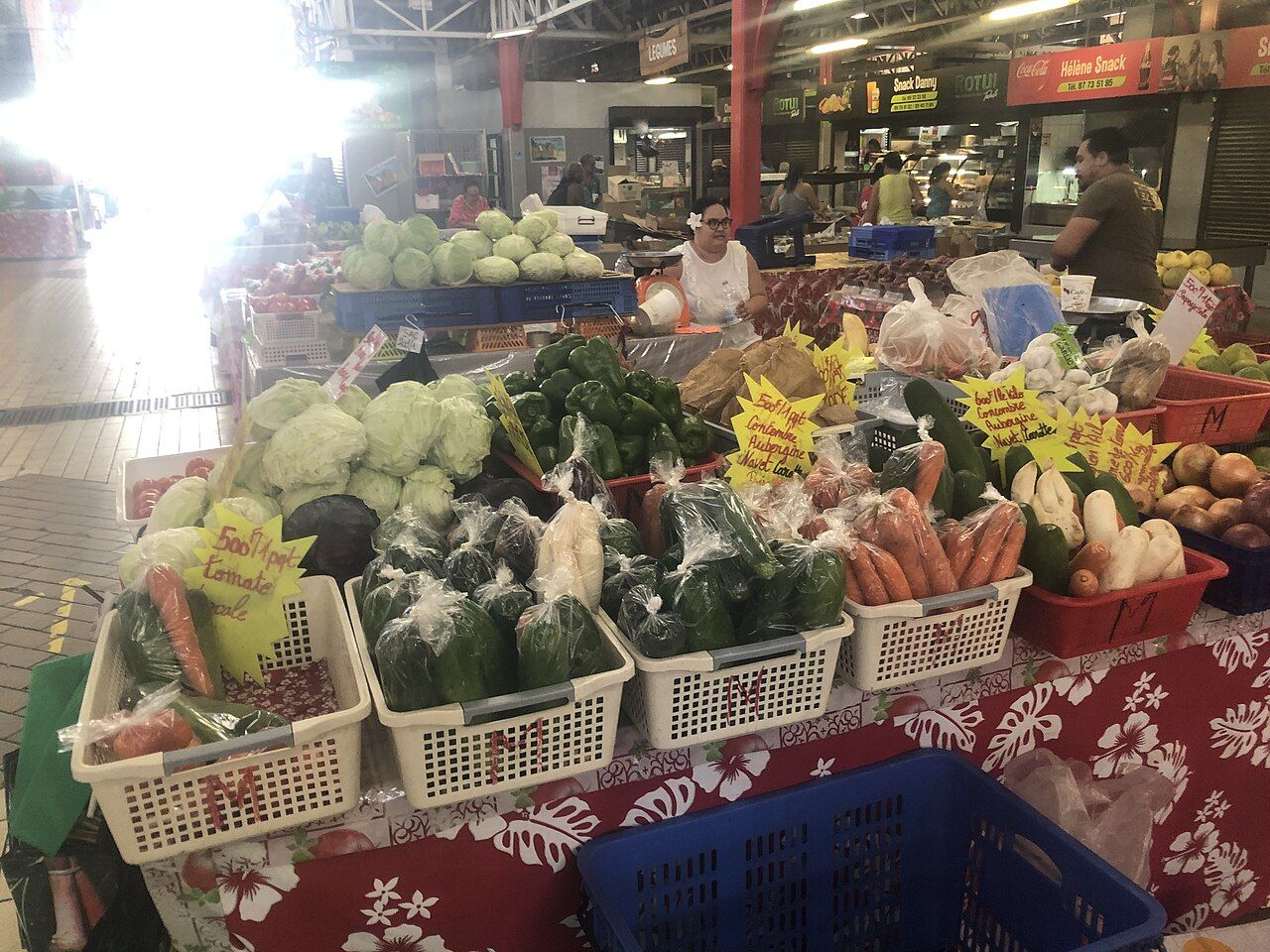
The fruit and vegetable stalls change with the seasons. Year round, expect bananas in several varieties, papayas, limes, coconuts and Moorea pineapples. In the hot months, roughly November to March, mangoes appear in great piles, with rambutans, lychees and avocados. Breadfruit, taro, sweet potatoes and cassava are sold for the island kitchen, along with bundles of herbs, ginger and chillies.
Flowers are everywhere: bunches of heliconia, ginger lilies and anthurium, and crowns and garlands made of fresh flowers and leaves, worn for church, celebrations and special days. The scent of tiare, the white Tahitian gardenia, hangs over the whole market. Buy a single bloom and tuck it behind your ear: tradition says the left ear for someone who is taken, the right for someone who is not.
Also on the menuA fruit-stand guide: mango, uru, papaya and pamplemousse
What to taste first
Start with a cold green coconut, opened at the stall, and drink the water. Then look for small food stalls and counters selling ready-to-eat dishes. Poisson cru is the classic, sold in small tubs to take away. Ask whether it was made that morning and eat it quickly, especially as the day warms up. The guide to poisson cru explains how it is made and what a good one tastes like.
Next, try poe, a dense, sweet pudding of fruit, usually banana, papaya or pumpkin, mixed with starch, baked and served with coconut cream. It is rich and filling, and a small portion goes a long way. Look too for firi firi, a sweet fried dough twisted into a figure-of-eight, eaten at breakfast with coffee.
Chinese-Tahitian food is part of every market morning: steamed buns, sweet buns filled with red bean paste or coconut, and chao men, the local chow mein. The story of the Chinese-Tahitian kitchen traces how these dishes became part of the everyday island table.
- Coconut water, opened in front of you
- A small tub of poisson cru, eaten cold
- Banana or papaya poe with coconut cream
- Firi firi and a coffee
- A slice of ripe pineapple or mango
Monoi and the upstairs crafts
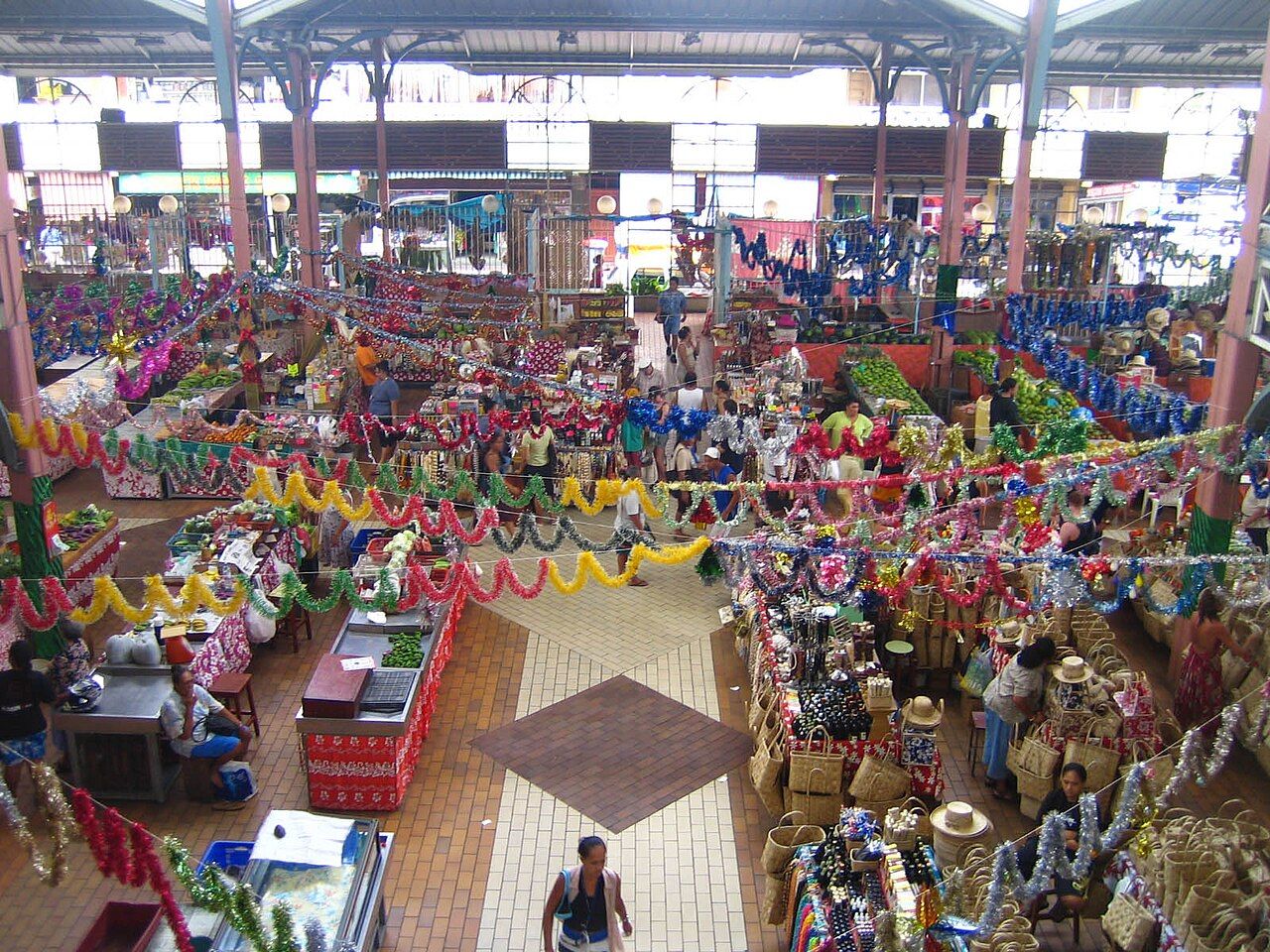
Climb the stairs to the gallery and the market changes character. Here, stalls sell handicrafts from across French Polynesia: woven hats and bags of pandanus leaf, shell necklaces, wooden carvings, pareu (the printed wrap worn by men and women), pearls and black-pearl jewellery, and bottles of monoi.
Monoi is coconut oil scented with tiare flowers, used on skin and hair. It is made by soaking the flowers in the oil, and it comes plain or with other scents such as vanilla. Ask whether it is pure, look for clear labelling, and choose smaller bottles if you are flying, as rules on liquids apply.
The gallery also gives you the best view of the market floor: the colours, the crowds, the piles of fruit and fish. Stand at the railing for a few minutes before you leave.
Buying, bargaining and etiquette
Prices at the market are usually fixed and clearly marked, and bargaining is not the custom. Prices are high compared with many places, so carry cash in Pacific francs, since not every stall takes cards. Ask before you photograph people or their stalls, and do not handle fruit unless the seller invites you to.
Prices at the market are usually fixed and clearly marked, and bargaining is not the custom.
A little French goes a long way. A greeting of bonjour or the Tahitian ia ora na before you ask for anything is expected, and merci or mauruuru afterwards is always appreciated. Point if you need to, ask for a small quantity if you only want a taste, and do not be surprised if a seller adds an extra banana or a sprig of herbs to your bag. Many stallholders have sold at the same spot for years and know their regulars by name. A friendly word, patience in the queue and an interest in what they are selling usually earn a smile, and often good advice on what is best that day.
Bring a cloth bag for your shopping and a cool bag if you are buying fish or anything raw. If you plan to take food back to your accommodation, keep it cool and eat it the same day.
Around the market
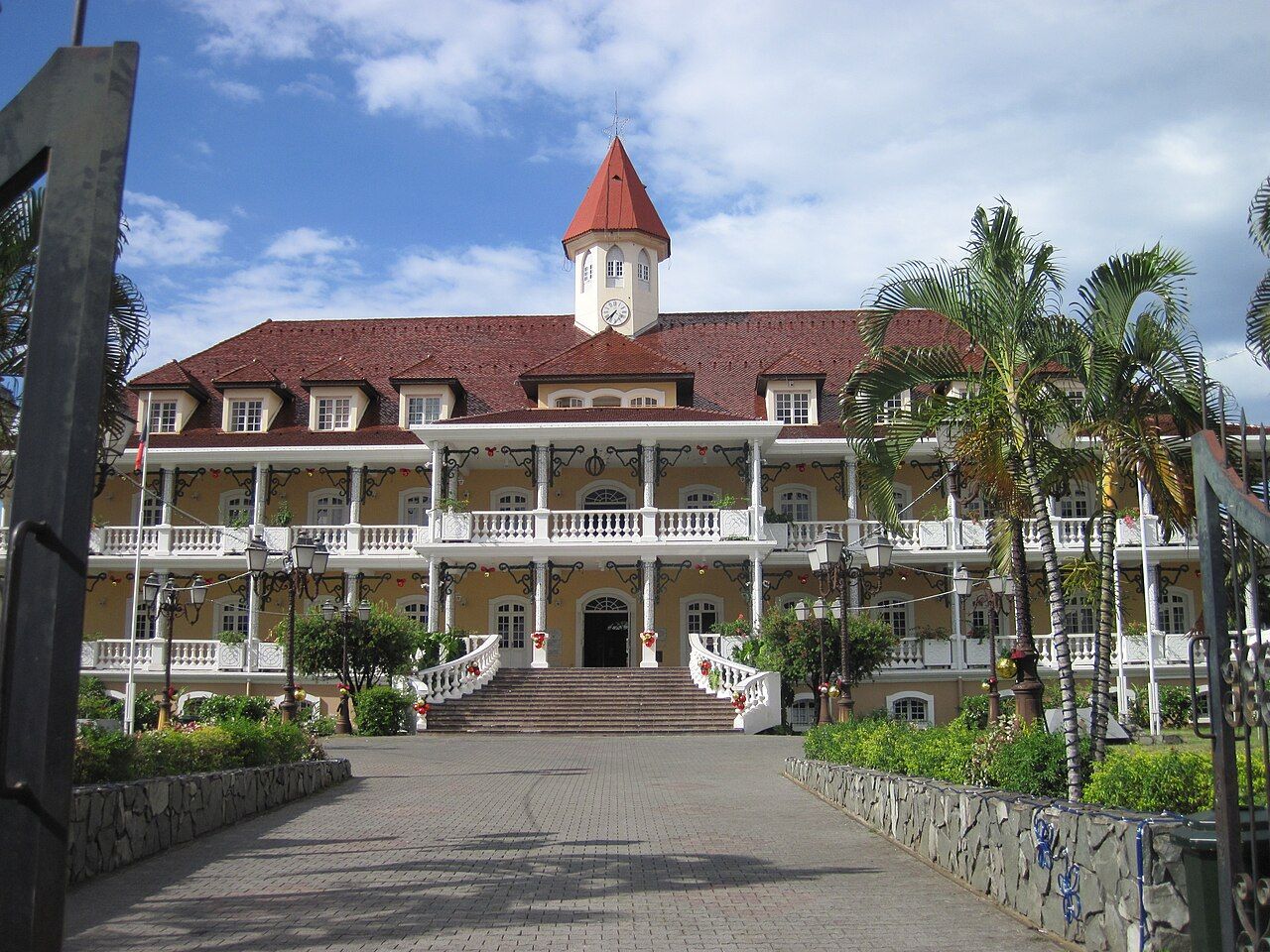
The streets around the market are the busiest in Papeete, lined with shops, Chinese-Tahitian bakeries and cafes. A short walk away is the town hall, built in the style of the old royal palace, with a red roof, verandas and a clock tower. In the evening the waterfront comes to life with food trucks, described in the story on evening food trucks on the waterfront.